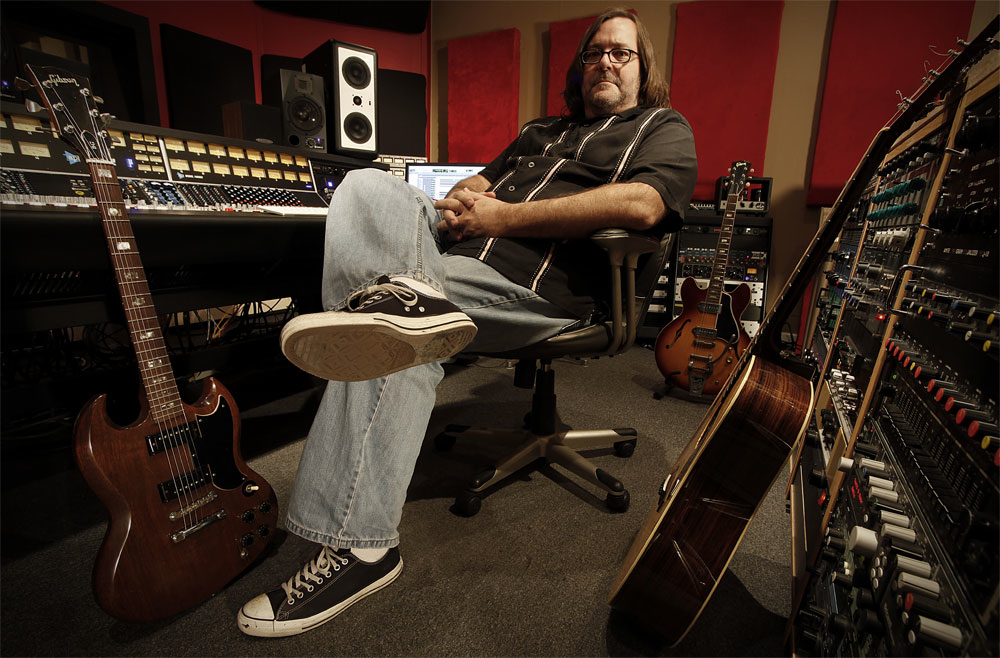
NASHVILLE, Tenn. — Recording engineer Pat McMakin approaches his work with an almost obsessive pursuit of the perfect sound.
The difference between CD, MP3 via The Tennessean
By the time a recording makes its way to fans via iTunes or over Internet radio, it possesses a fraction of the total sound information captured in the studio — as little as 3% of the original, live sound waves. Even CD formats are stripped of up to 90% of the live recording to fit onto a 4 3/4-inch disc.
Often gone are the last lingering notes of a bass guitar, the echo of a drumbeat, the very high and very low notes.
But now, in Nashville, a handful of Music Row businesses are beginning to invest in new products and technologies to increase the fidelity of music at every stage of the recording and listening process, from new in-studio recording technologies to new music formats to home stereo equipment.
Whether consumers who have grown accustomed to listening to tunes over $10 ear buds will be willing to pay for better sounds, however, remains a big question mark.
“I already invest a lot in my music, in my laptop and my iPhone and my Wi-Fi at home,” said Corey First, 28, a marketing assistant from Franklin, Tenn. “I don’t have the bucks to spend more. I have no complaints about my music.
Still, the steep drop in sound quality as digital music has taken hold remains a source of aggravation for artists and music professionals — and audiophiles among consumers — who argue that music is losing many of the subtle qualities that gave it emotion, spaciousness and depth in order to make songs Internet ready.
“The irony is that we’ve been making better- and better-sounding records in the studio, but the technology has been dumbing them down for years,” said McMakin, director of operations at Ocean Way Studios on Music Row.
“All of us —the engineers, the artists, the musicians — put a lot of heart, a lot of time, a lot of care into making music. For us to hear the same piece of music on an MP3 or radio sounds disheartening,” said McMakin, who has engineered audio for Many in the music industry are now beginning to advocate for sound quality solutions.
Last week, singer Neil Young took his campaign for higher-fidelity digital music to a technology conference, revealing that Apple’s Steve Jobs, before his death, had been working on creating bigger digital files to capture a wider range of sound. (Jobs, Young noted, preferred listening to his music on vinyl records.)
Hybrid approach
Last month, at the former historic RCA Studio A on Music Row — now known as Ben’s Studio — country artist Jerrod Niemann recorded tracks for his latest album with a new invention he hopes will increase the audio quality of even the digital versions of his album.
The recording studio is the same Music Row space where stars such as Elvis Presley, Chet Atkins and Joe Cocker made albums during an era in which bulky analog tape decks faithfully captured the sound in a studio and music was sold on vinyl records. Analog captures the entire spectrum of sound, as does vinyl, because the music isn’t compressed or squeezed to fit.
Digital recordings, on the other hand, are captured by computers, which record only certain slices of sound at split-second intervals that are then encoded into computer language. All those 1′s and 0′s end up representing a numeric interpretation of sound.
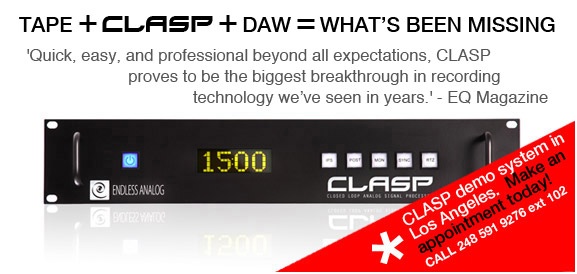
But Niemann’s recording session relied on a new piece of recording machinery known as CLASP, which takes a hybrid approach.
It records on analog tape and feeds it into a digital machine, giving producers the ease of editing digital with a better-recorded sound, said CLASP’s inventor, local music business entrepreneur Chris Estes.
Estes is marketing the equipment to artists, producers, studios and record companies after spending six years tinkering with the invention in his Bellevue home.
Thus far, its $3,000 to $7,000 price tag has attracted established record labels rather than new independent artists.
Taylor Swift, Adele and the rock band KISS are among the artists who have hired Estes to record with CLASP to capture what Estes calls that “warm, detailed, musical sound.”
“It’s way clearer to listen to,” said Niemann, 32, who is signed with the Sony-owned label Arista Nashville. “I want the fans to hear the music the way it’s supposed to be, the way that I hear it. It’s way better than digital.”
Vinyl is most faithful medium
Although no medium is capable of duplicating exactly the quality of a live performance, the best audio recordings and playback equipment capture the entire range of sound in the studio.
Vinyl is the most faithful medium, with no compression or translation of music.
Among digital recordings, Blu-ray offers one of the highest resolutions possible — the biggest digital space to capture and then rebroadcast a much higher portion of the recorded sound.
But CDs subtract portions of the sound to fit on discs. And MP3s subtract even more.
In mathematical terms, a typical Blu-ray song contains 2,304,000 bits of information. A CD contains a third of that — about 705,600 bits.
But a digital version — an MP3 downloaded from iTunes or the Internet — captures just 70,000 bits.
For all of the hundreds or thousands of minute human-driven adjustments of microphones, sound boards, mixing and mastering that go into constructing a professional album, it’s a computer software program that uses a standard algorithm that decides which of the millions of bits of information aren’t necessary for the human ear — in effect, which parts of a song a listener can do without.
Dynamic ranges (louds and softs) and frequency responses (high and low notes) are often casualties of the compression process.
“The computer program has to take all this information and make it so it can cram down a little pipe and then make it sound good on the other end,” McMakin said. “But it’s like a computer program you put a short story into and it decides all the letter v’s are unnecessary.”
Sound quality then further depends on the consumer’s playback equipment — ear buds and laptop speakers, for example, versus higher-quality stereo systems.
“It’s very frustrating, but when the computer came in people plugged in those little speakers and they seem satisfied with that,” said John Corigliano, 73, a New York composer in contemporary classical American music circles who records with the Franklin-based Naxos label, the biggest classical music label in the world.
“I work long hours getting the sound quality just right,” he said.
To increase the quality available to fans, Corigliano is working with Naxos to produce audio Blu-ray versions of his orchestral compositions. But higher-quality sound isn’t cheap.
At about $19, Corigliano’s Blu-ray Circus Maximus is twice the price of the CD version of his work. No other major label is issuing sound-only Blu-rays, although the format has been used for concert films.
Klaus Heymann, Naxos president and founder, said the company has had to roll back its original plans to issue all new recordings on Blu-ray because it hasn’t yet caught on among consumers.
“We are trying very hard to get other labels on board,” Heymann said. “Some who are not as financially strong as us don’t want to spend money on something that’s not yet a sure thing. But we think it will be because we’re seeing more people buy surround-sound TV systems, and we think consumers are going to understand that equipment is not only good for their video, it’s good for audio.
“The Hong Kong-based Heymann predicts that a proliferation of Internet-ready televisions in the near future probably will make listening to music on computers a short-lived phenomenon. Increasing Internet bandwidth to allow for bigger files that capture more sound information to stream or download also is critical, he said. That would allow for bigger digital files — a step that a handful of recording label executives also want to see.
Gibson jumps in
Nashville’s Gibson Guitar is counting on a resurgence of consumer interest in listening to music at home.
Recently, the longtime guitar maker announced it had created the Gibson Pro Audio division, which includes a partnership with Japanese consumer electronics manufacturer Onkyo to make and market stereo systems, speakers and home theater systems to consumers who, Gibson CEO Henry Juszkiewicz believes, want better-sounding music.
“With Onkyo, our goal is to bring the same exceptional experience artists demand in the studio to a larger consumer base,” the Gibson boss said.
Gibson’s Onkyo partnership includes high-end home system equipment that runs to the thousands of dollars, as well as receivers that run only a few hundred dollars.
That may be a big leap for many consumers, but others seem to be inching in that direction after years of eschewing bulky home systems.
In 2011, sales of such audio systems reached $4.4 billion, according to the Consumer Electronics Association. This year they’re projected to reach $4.53 billion. That’s still down from the $5 billion in sales in 2007.
“I don’t think we’ll ever go back to full-content audio and CD players in the home,” said Sean Murphy, senior analyst with the Consumer Electronics Association.
“But we’re seeing home receivers equipped with digital playing abilities running through a receiver that are 100 times better in terms of sound quality than listening to an iPod on a speaker dock.”
There are a few other factors giving some Nashville music makers optimism that consumers are ready to return to better-quality sound products. Gamers are demanding better audio to go along with increasingly sophisticated video systems, said McMakin, who last week recorded a full score by an orchestra for an upcoming Sony PlayStation game.
Bandwidth probably will expand, allowing for bigger digital music files that store more sound frequency.” My instinct is there’s going to be an ‘aha moment,’” McMakin said. “There’s going to be a generational shift where there will be more reasonable access to alternative formats than we have now, and people will hear the difference.”



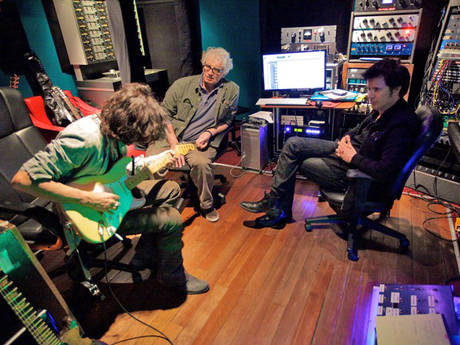
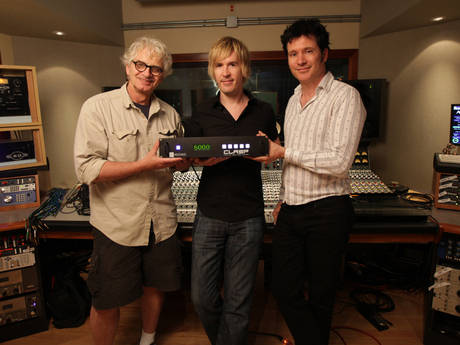
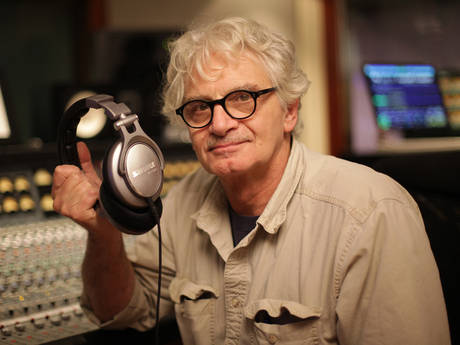
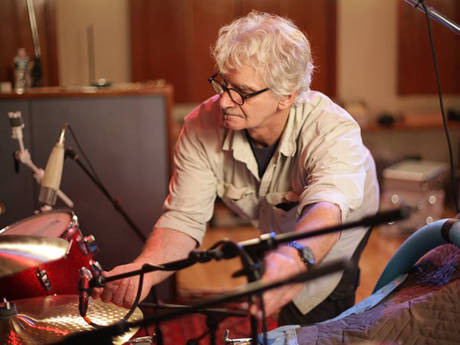




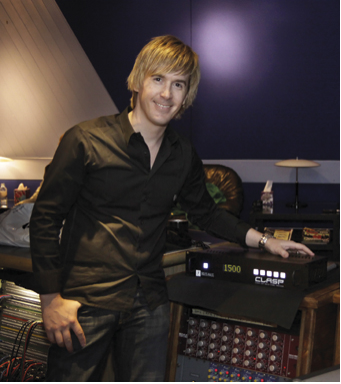


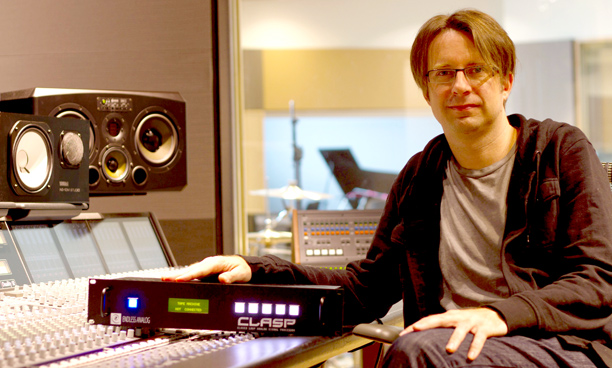


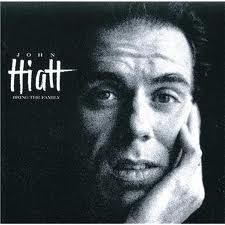 Nashville, TN (April 5, 2011)–John Hiatt is tracking his next album in Nashville with producer Kevin Shirley and an Endless Analog CLASP system.




 ONLINE EXTRAS






![Bryan Lenox: “You’d be amazed with the difference in Michael [W. Smith’s] singing because of hearing himself analog in the playback.”](http://mixonline.com/recording/mixing/bryan_lenox_analog.jpg)


